
Form Without Force
Why patterns are not the players but the notes being played.

I have a deep appreciation for what Michael Levin is doing right now in biology. He is expanding our sense of causality beyond genetic reductionism, and he is helping to clear away tired materialist dogmas that blind us to the extent of feeling and agency in nature. That said, I think I may have a real philosophical divergence from one specific move in his framing of “Platonic space.” My lecture contribution to his Platonic Space Symposium was meant to name and avoid this move:
It may be that Levin and I do not disagree and that I am just confused by a terminological difference. But here is where I think we part ways. As Levin writes about his groundbreaking pre-print “Ingressing Minds” (2025) (Levin borrows Whitehead’s term ‘ingression’ in his title):
“There are a few additional components of this model that I discuss in that paper. One proposal is the idea that the patterns are not static (eternal unchanging Forms) but instead have their own active dynamics. Another is that the patterns are the agents, and the physical bodies just their interface, as opposed to the more conventional view that the physical embodiments are the agents and whatever patterns they benefit from are a sort of add-on.”
I agree with Levin’s first claim. I do not think the Forms are static and unchanging. I take this to be Whitehead’s position, too: the order of possibility is real, but not as a museum of finished archetypes. Nature is creative, and creativity is not merely the shuffling of pre-determined positions. I would also not want to be misunderstood as claiming that the mineral component of our physical bodies has all the agency. No, in my view, agency is not with Forms alone or with supposedly dead matter alone.
Where I part company is the leap that makes the patterns the prime agents and bodies “just their interface.” Levin uses “interface” in a technical sense, and I understand his concern that we not mistake a specific implementation for the generic pattern-space it expresses. My worry is that this may easily slide into imagining individual organisms as mere puppets, if no longer of their genes, then of nonphysical patterns. This move risks re-inscribing the samesort of reductionism we just escaped by rejecting gene-centrism. Only now the creative agency of individuating organisms is not undermined by reduction “down” to arbitrarily mutating genes but “overmined” (to use Graham Harman’s helpful term) by reduction “up” to mathematically necessary Forms.
So to reiterate where I’m coming from: I argue that agency is realized in the organic experients that actually arise and perish amidst this cumulative evolutionary adventure we call the universe—not in the pure eternal possibility of Form as such. Possibility cannot ever actually occur by itself. Form has no efficacy as Form in itself, only as felt by someone. Patterns of possibility are essential participants in the what and how of actual occurrences but they are not puppeteers. Forms are necessary but not sufficient for the prehension of pattern and the expression of agency.
And yet metaphysics is justified in imagining “Forms in themselves” as at least a regulative ideal because of the continual recurrence of real possibilities amidst the passage of nature. Nature appears ordered because it does not behave in impossible ways. Something stands firm in the flux and directs our attention beyond particular events toward the whole of time (which is all that need be meant by “eternity”). If nature were not resplendent with mathematical patterns, and if it did not reward accurate inductive generalization, natural science would be impossible. Whitehead: “science is not a fairy tale.” So why is nature like that? Why have scientists been so rightly tempted to proclaim deterministic “laws of nature”?
Whitehead’s eternal objects are meant to provide one of the conditions for the possibility of natural science by offering a way of making the existence of a self-organizing nature intelligible to mind. Eternal objects name the condition for the possibility of recognizing stable patterns across time: the “this can happen again” without which there is no induction, no modeling, no measurement, no experiment, no science.
But Whitehead refuses to turn that stability into a timeless determinism. Because he affirms that Forms evolve—“the passage of time casts the shadow of truth back upon eternity, enriching it,” as he is recorded saying in his 1924 Harvard lectures—he rejects the picture of nature as determined by fixed laws in favor of one of open-ended creative emergence. Possibilities or Forms are real in an ontic and not just epistemic sense. But their selection and integration is a cumulative historical process, meaning that what actually occurs feeds back upon and reorganizes them. Cosmic novelty is not pre-scripted by disincarnate patterns. The patterns are not the players but the notes being played.
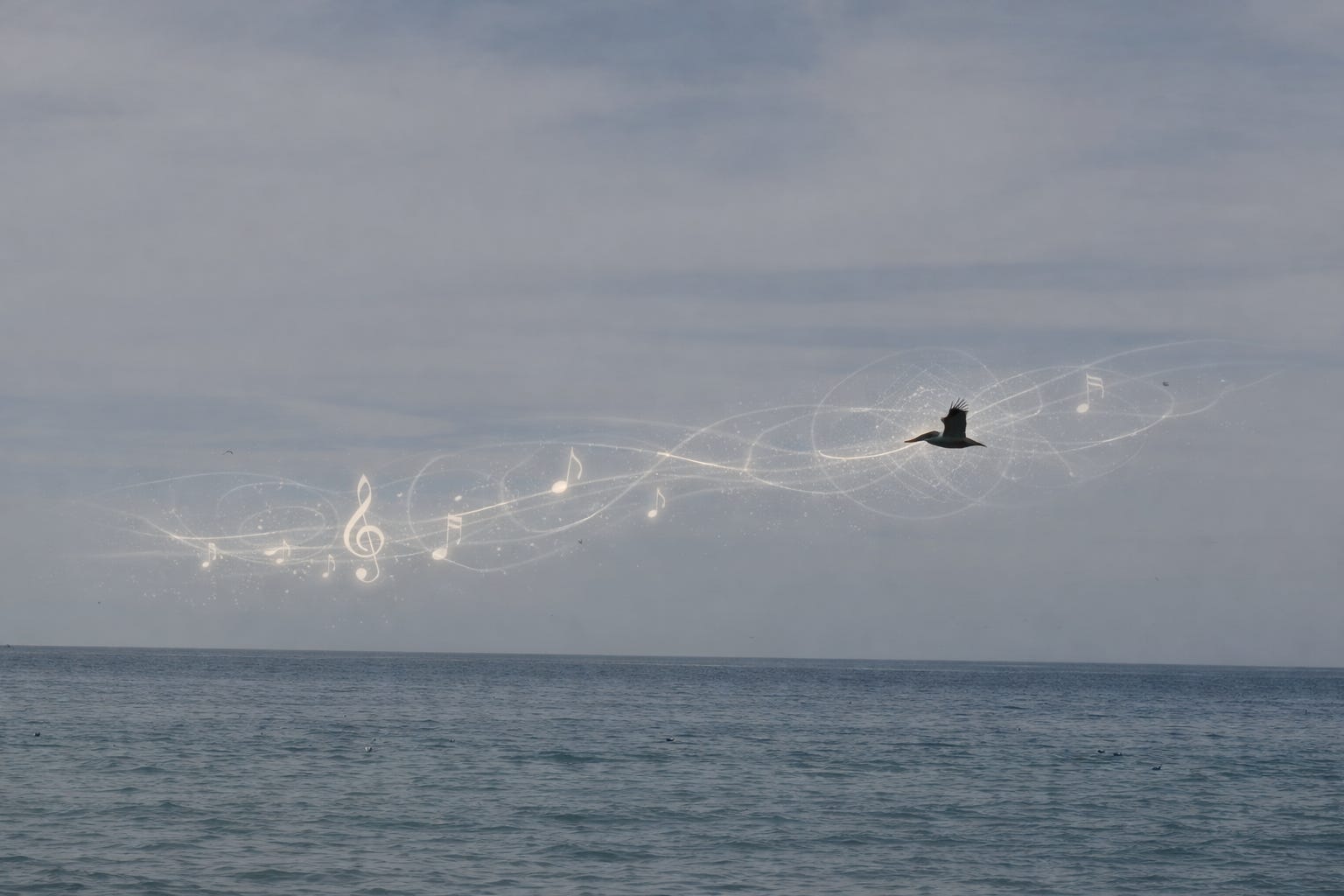
Patterns can be dynamically active without being primary agents. Patterns can constrain, afford, lure, and recur. But agency—decision, valuation, the appropriation of the multiform past into a novel subjective unity—belongs to actual occasions and the enduring societies they compose. The organism is not a passive receiver of Form but the present locus of feeling and decision, even as its experience organizes itself in relation to a structured realm of relevant possibilities that it did not create.
The Forms only gain something like agency in Whitehead’s cosmology when we include his process theology. Now, biology and theology have hardly been on speaking terms for the last century and a half. So I don’t expect Levin to start preaching anytime soon. But to the extent that his scientific research has led him into such deep metaphysical waters, it seems to me there comes a point when “God” can no longer be left out of the equation. I don’t mean God as an object of religious devotion but rather as a metaphysical category, necessary for the coherence of our self- and world-understanding. In Whitehead’s scheme, which he claims is an attempt to “secularize the divine function,” a Divine Eros is said to primordially envisage the eternal objects, ordering them. God thereafter functions in the experience of finite actual occasions as an aesthetic gradient or lure toward relevant novelty. God does not override creaturely freedom but proposes intensity and harmony. Each creaturely subcreator must decide for itself how to receive and replant God’s gift of meaningful experience. God consequently suffers and preserves the world’s many feelings, weaving them into the eternally growing truth, beauty, and goodness of the divine life.
This is also where I think one of the deepest questions we can fathom is hiding in plain sight: if pure possibility cannot actualize itself, what is the provenance of an actual historic universe at all? Why is there something rather than everything? You ultimately need some account—metaphysical, theological, or both—of how possibility possibilizes, how it becomes primordially valued, ordered, and lured into the sort of finite actualization we find all about us: an organized and self-organizing universe evidently capable of knowing itself.
None of this requires returning to a frozen, two-world Platonism. In fact, there are justified readings of Plato’s dialogues that already suggest an intrinsic “life and motion” (psyche) in the Forms. But even granting that, the key distinction remains: between the intelligibility of order and the lived enactment of that order; between possibility and actualization; between the reality of pattern and the agency of the pattern-weavers.
So I am thrilled to follow Levin beyond genetic reductionism into fields of bioelectrically mediated collective agency. Organisms navigate topoi of possibility that are not reducible to random mutations in nucleic acid sequences differentially selected by deterministic physical environments. Let’s admit organismic subjectivity and teleology back into biology without embarrassment. But let’s take care not to reduce living organisms to the puppets of the patterns they ingress.
Compelling framing. This short piece really aids my understanding of your article on eternal forms. As Levin approaches this area of inquiry from biological science and you are clearly wrangling with the harmonization of scientific/quantum/morphological theories with philosophical/metaphysical approaches to consciousness I wonder how our understanding of animal (seemingly) moral/ethical behavior fits into the ’god’/divine equation. See https://www.noemamag.com/the-moral-authority-of-animals.
The Book of Genesis shows us how consciousness was embedded into physical reality, and also names why no one has solved the Hard Problem. Plato's Forms have always been interpreted as being frozen. I see them as being alive. I am in close agreement with what you have said here. We are resonating.